
Discover
User interviews and stakeholder sessions to understand how team leads and team members actually worked day to day.
Part of digital transformation of contact center processes
The goal
People were working from home all over the world during the pandemic. The client company (insurance domain) took the same approach at work and wanted a productivity measure for their employees. Originally, the company relied on traditional methods — Excel sheets and Word documents — to track the effort each employee completed. As a design solution, we created a platform to manage the productivity of all 1,000+ employees across the company.
My role and ownership
We used the double diamond for the design process, iteratively. I had multiple sessions with stakeholders to get a clear picture of the problem and real scenarios, and worked with the internal team — business analysts, developers, and the tech lead — at every stage of the project.
User interviews and stakeholder sessions to understand how team leads and team members actually worked day to day.
Identified the real challenges behind the request and defined the critical success factors for the platform.
Brainstormed and ideated on possible solutions against five defined user scenarios.
Prototyped the design solution and tested it with real users at multiple stages of fidelity.
Research
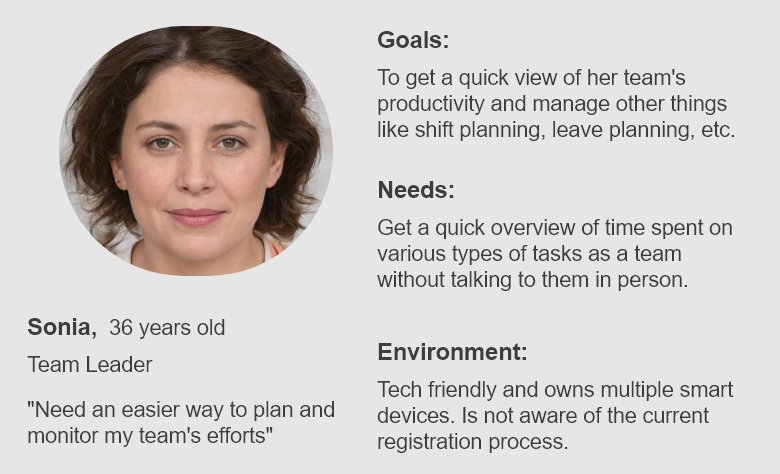
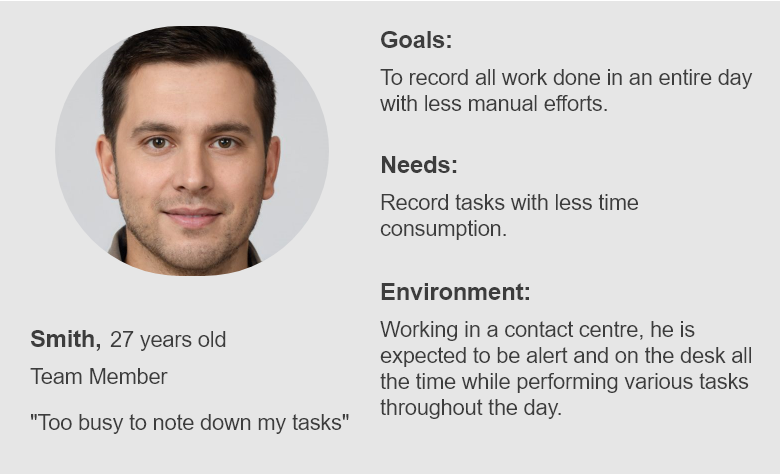
I conducted user interviews and customer interviews with 12+ users to understand the user’s way of working, including both team leads and team members. It helped me highlight the real needs. We had two users: a team leader who leads a team of around 10 team members, and a team member — both working in planned shifts. On the basis of the data collected, I created two user personas.
Key insights
I gathered all the information captured in interviews and understanding of the personas, then made a note of all the findings.
A team leader analyzes his team members’ productivity and assigns shifts.
A team member enters his efforts and also tracks them on a daily basis.
The challenge
How might we design a digital solution to save team leaders’ time in planning shifts?
Process
Sprint 1: Ideation
Now that our main problems were revealed, I started brainstorming and bringing out all possible solutions. I worked with my team daily to ensure all business requirements were met, and that I was on the right track solving the right problem.
User scenarios
We defined five scenarios for the given problem:
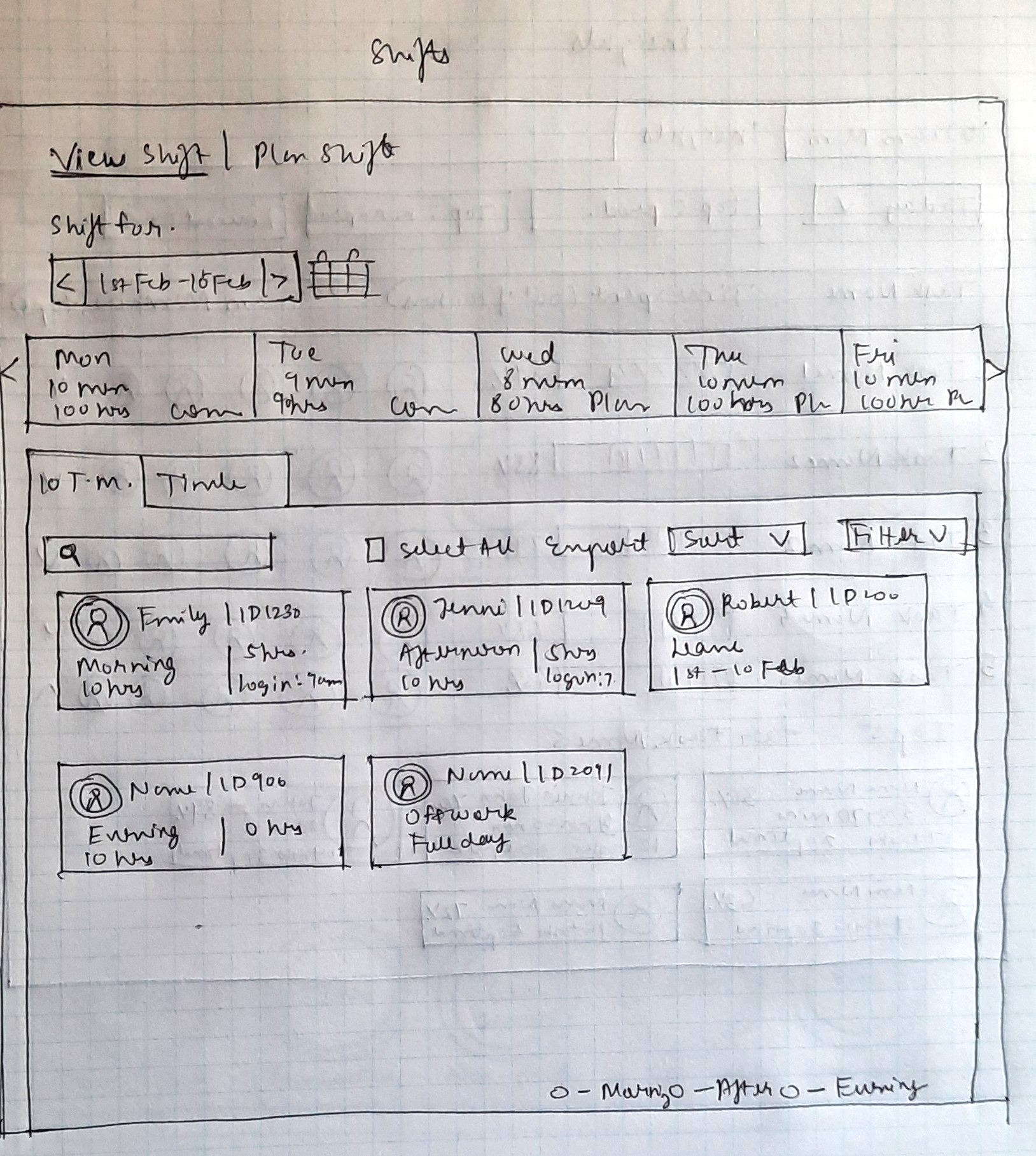
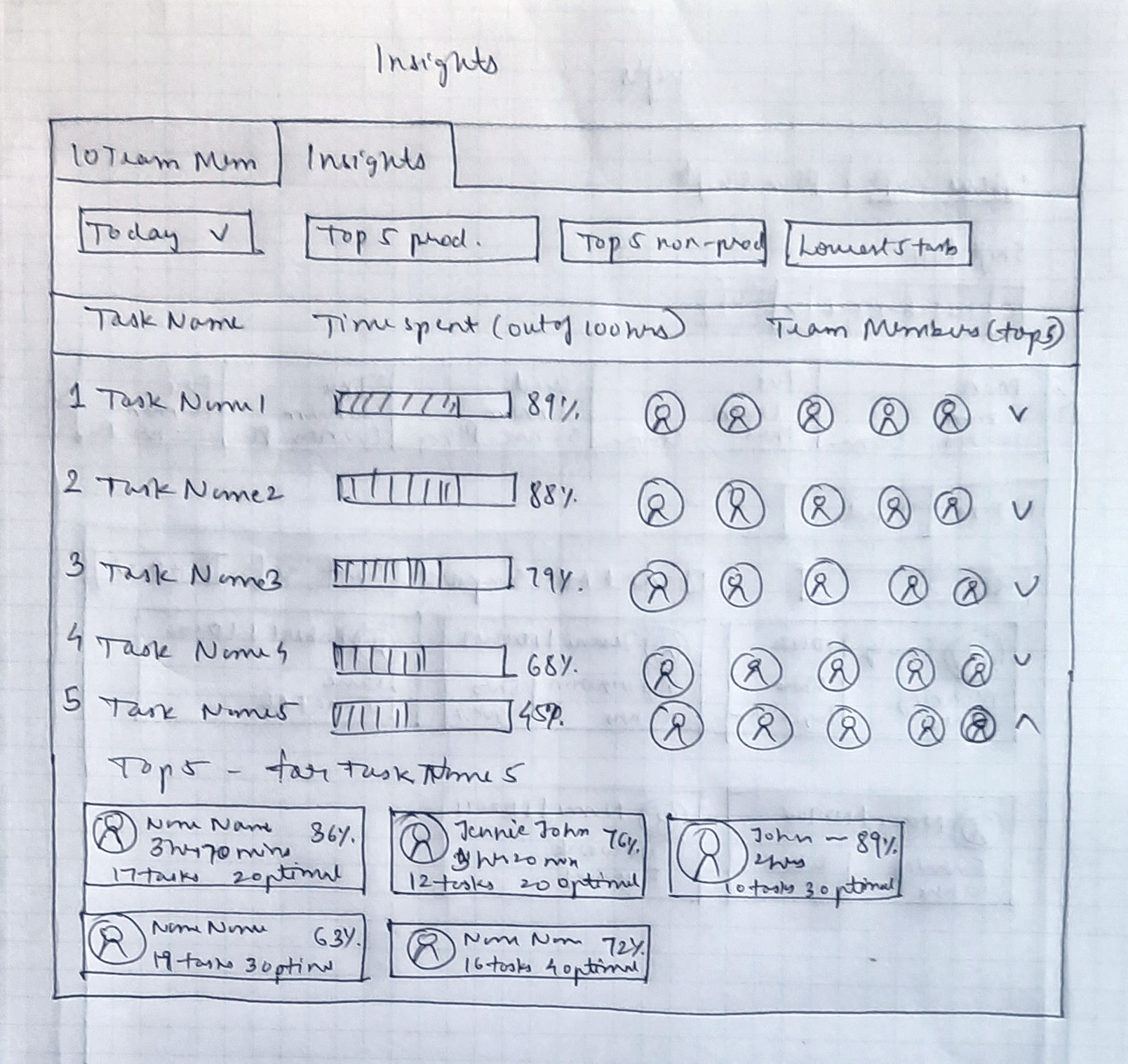
I created wireframes to ideate on possible ideas as per the user scenarios.
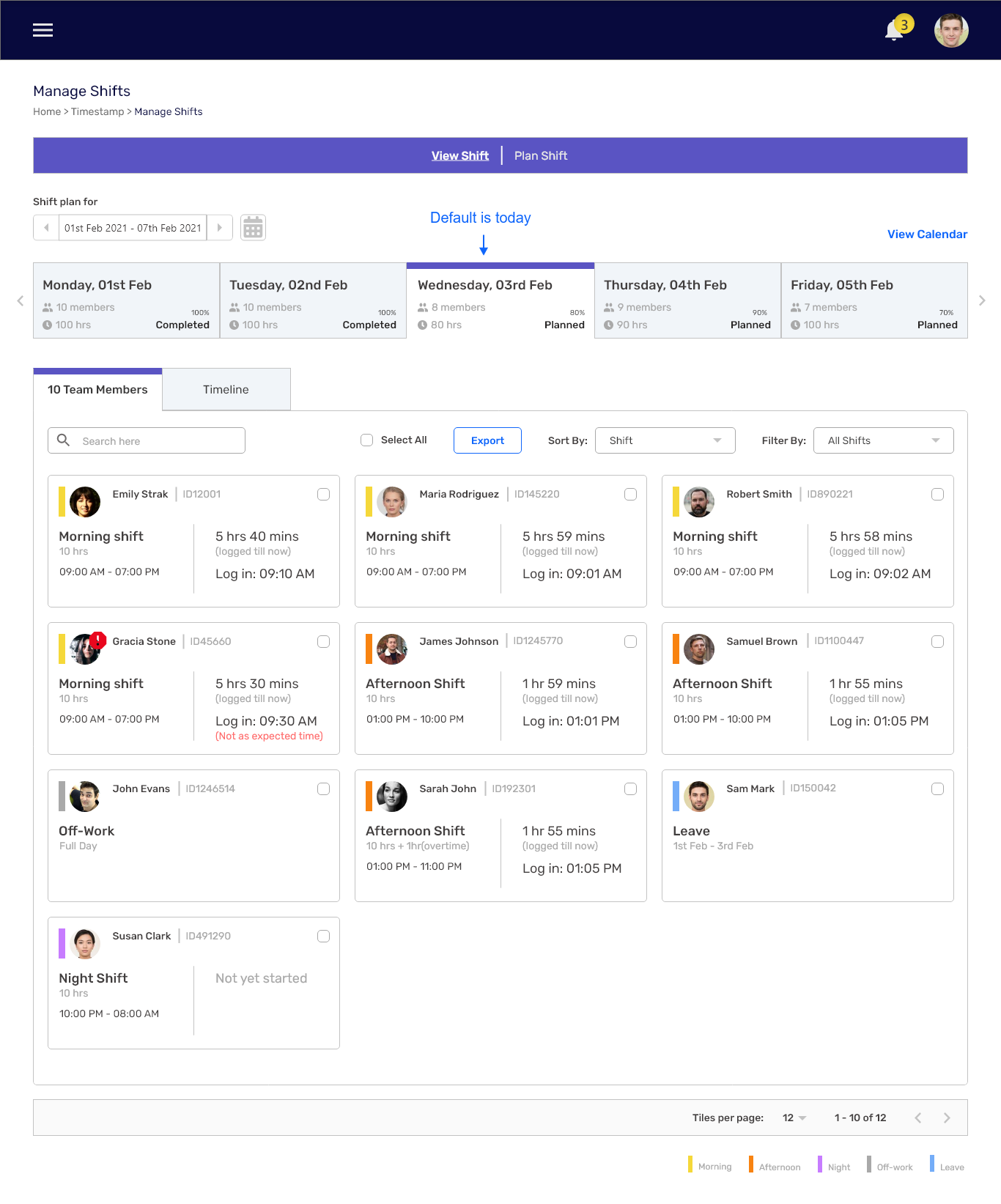
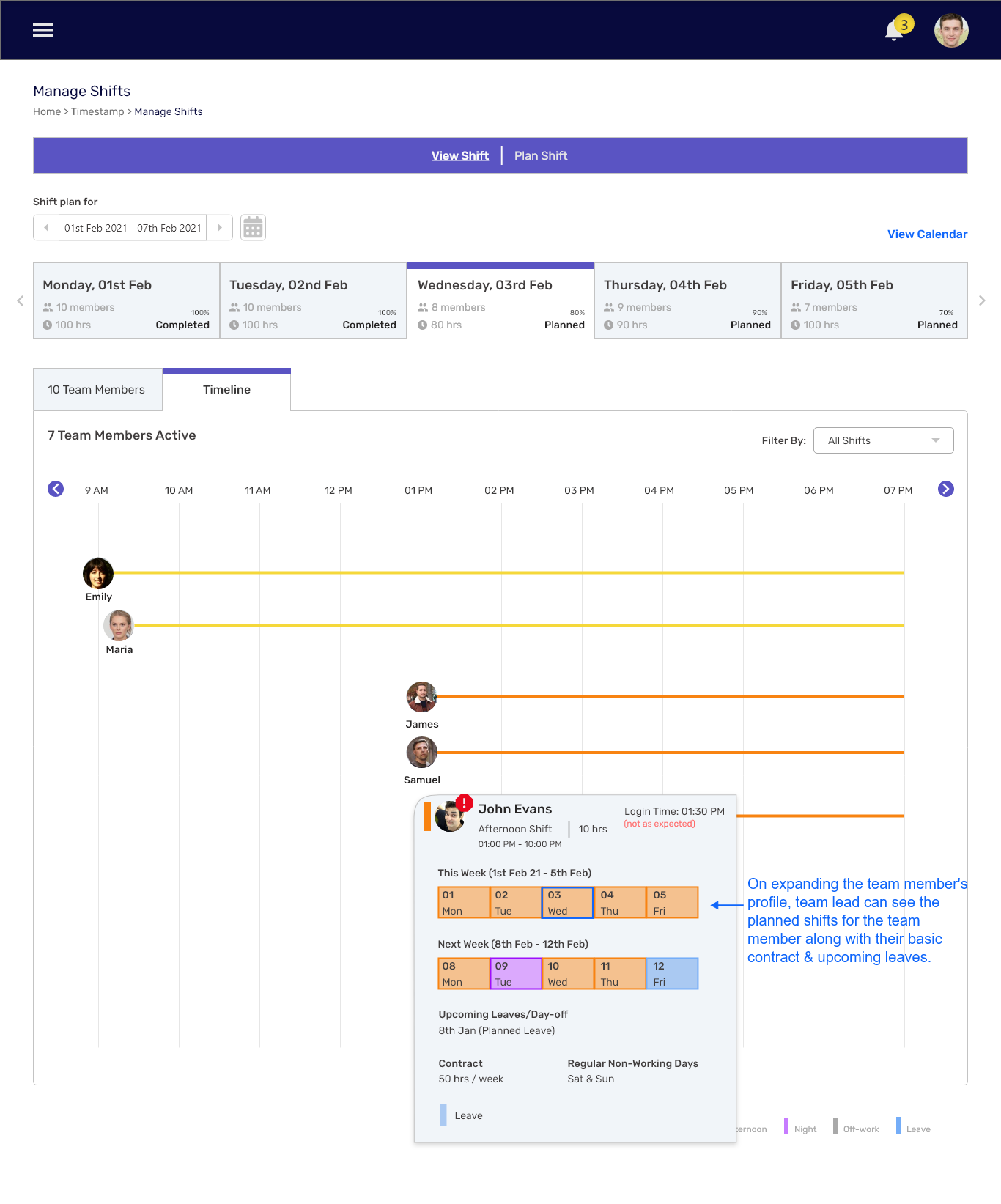
Sprint 2: Design Solution
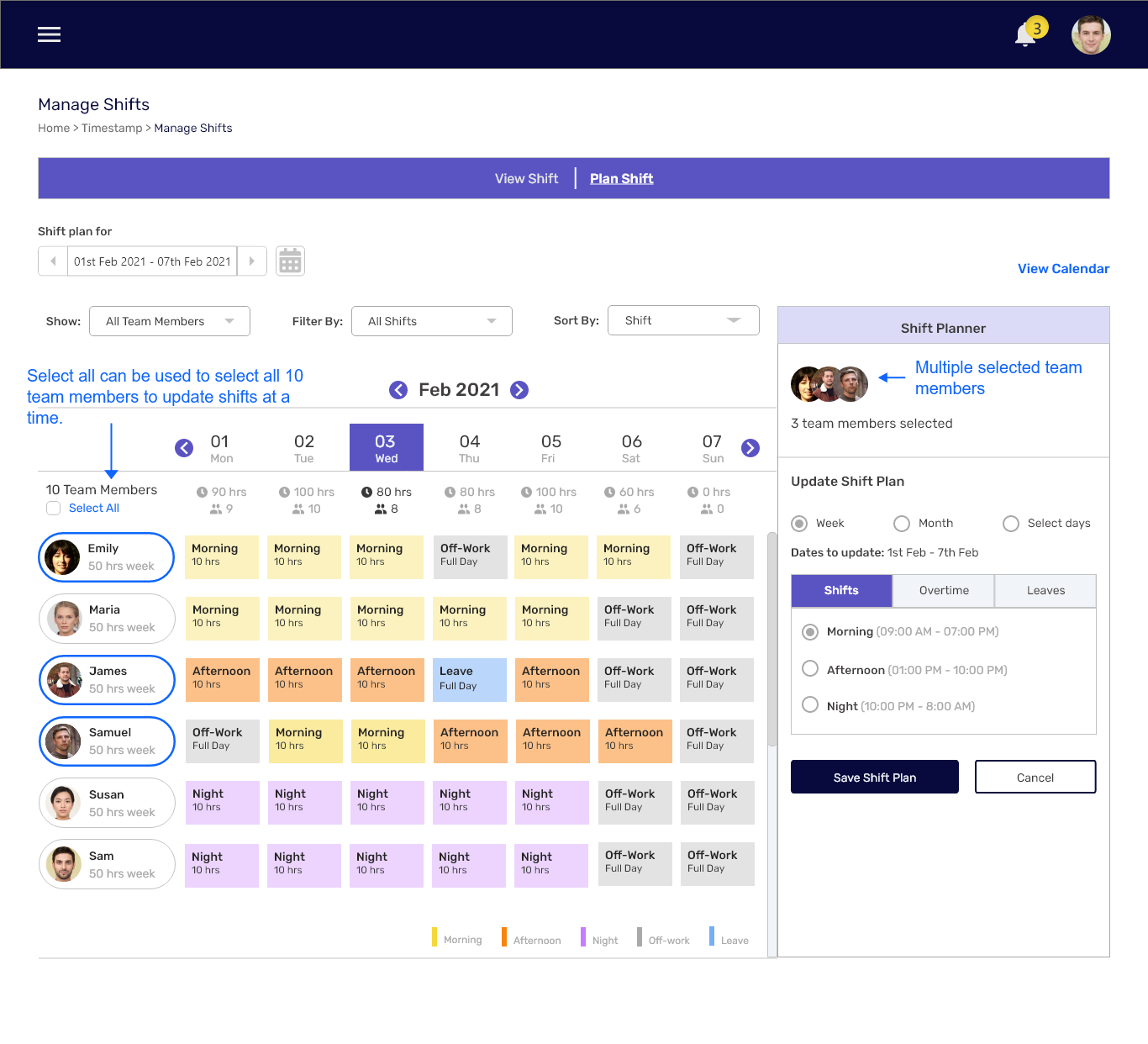
Testing
Testing was done at various stages of the design process. Initially, the wires were tested with real users in a remote setup, and iterations were carried out after the feedback. The final design was also tested, and we got more than 76% positive feedback from our real users as well as stakeholders.
Impact
Learnings
Getting to the core and asking “why” helped me a lot in getting answers to my questions, and helped shape the design solution. This project also helped me practice iterative testing at various fidelities of design.